
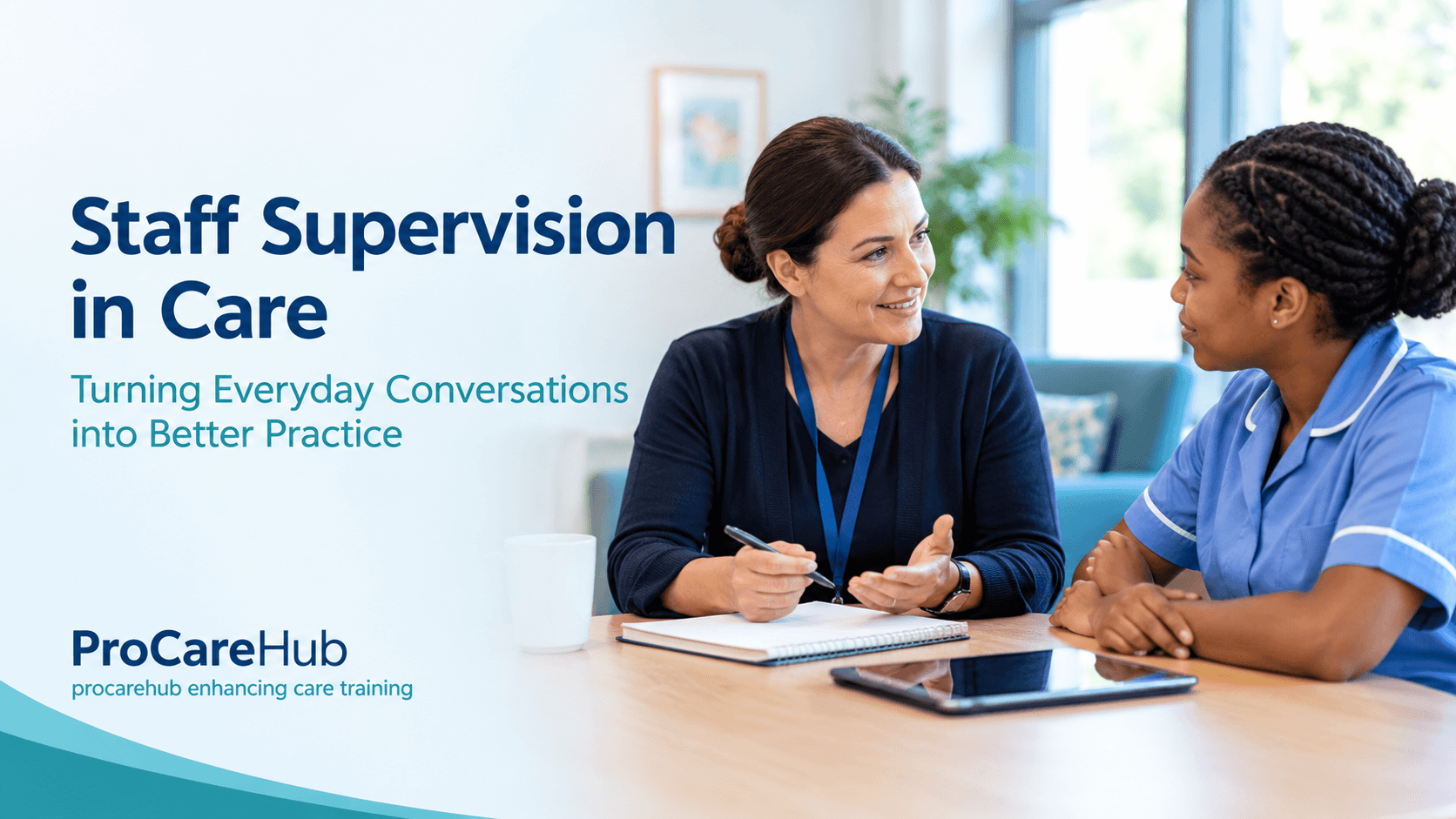
Staff Supervision in Care: Turning Everyday Conversations into Better Practice
By ProCare Hub Team
Providing quality care involves more than completing mandatory training. Care workers also need regular feedback, guidance and opportunities to discuss challenges in their roles.
Staff supervision gives managers dedicated time to review performance, identify development needs and ensure employees feel supported. When carried out effectively, it can improve staff confidence, encourage professional development and help maintain safe, person-centred care.
However, supervision can sometimes become a routine administrative task. Meetings may be rushed, records repeated and agreed actions forgotten. To make a real difference, supervision must focus on practical improvements rather than paperwork alone.
What Should Staff Supervision Cover?
Supervision should reflect the employee's role, experience and responsibilities. Important areas to discuss include:
- Performance and responsibilities: Review achievements, challenges and areas requiring improvement.
- Training and development: Identify skills gaps, refresher training needs and opportunities to improve competence.
- Safeguarding and safety: Discuss concerns, incidents, professional boundaries and reporting procedures.
- Staff wellbeing: Give employees an opportunity to raise concerns about workload, stress or workplace support.
- Quality of care: Review communication, dignity, record-keeping and adherence to care plans.
- Future objectives: Agree clear actions and review progress at subsequent meetings.
These discussions help managers understand what is happening in practice and identify issues that might otherwise go unnoticed.
How Can Managers Make Supervision More Effective?
1. Prepare for every meeting
Managers should review previous supervision notes, outstanding actions, training records and relevant concerns before meeting the employee. This helps keep discussions focused and ensures important matters are not overlooked.
Employees should also be encouraged to suggest topics they want to discuss.
2. Encourage open conversations
Staff are more likely to raise concerns when they feel respected and listened to. Managers should ask open questions, give employees time to explain their experiences and avoid making every discussion feel like a performance review.
For example, asking, “What challenges have you experienced during your shifts?” may reveal training needs or practical difficulties that a simple question about whether everything is fine would miss.
3. Link supervision to training
Completing a course does not always mean that a worker can apply their learning confidently.
If supervision identifies uncertainty about medication procedures, safeguarding or moving and handling, managers should arrange appropriate guidance, training or competency assessment.
Follow-up is essential to establish whether the support has improved the employee's knowledge and practical skills.
4. Agree clear actions
Each significant concern or development need should lead to a practical next step. Record what needs to happen, who is responsible and when it should be completed.
Serious safeguarding or safety concerns must be escalated promptly through the appropriate procedures rather than left until the next supervision meeting.
5. Review progress
At the next meeting, revisit previous actions and check whether they have been completed. Discuss any barriers and agree further steps where necessary.
This helps turn supervision into an ongoing process of improvement rather than a series of disconnected conversations.
How Often Should Care Staff Receive Supervision?
Supervision arrangements should reflect the needs of the service, the responsibilities of individual workers and applicable regulatory or professional requirements.
New employees, staff developing new skills and workers experiencing difficulties may require more frequent support. Additional supervision may also be appropriate following an incident, a change in responsibilities or concerns about performance.
Care providers should establish a clear supervision policy, document their arrangements and monitor whether meetings take place as planned. The aim is not simply to meet a schedule, but to ensure employees receive appropriate support when they need it.
Keeping Accurate Supervision Records
Good supervision records help managers track progress, identify recurring concerns and demonstrate how staff are supported.
Records should normally include the meeting date, key discussion points, training needs, agreed actions, responsible persons and review dates.
Information must be accurate, factual and stored securely, with access limited to authorised individuals. Managers should also ensure that outstanding actions are followed through and that records reflect the actual discussion rather than simply repeating previous entries.
How Does Supervision Support CQC Compliance?
For providers regulated by the Care Quality Commission (CQC) in England, Regulation 18 of the Health and Social Care Act 2008 (Regulated Activities) Regulations 2014 addresses staffing requirements, including appropriate staff support, training, professional development and supervision.
Effective supervision can help providers demonstrate how they identify learning needs, support staff competence and respond to concerns. However, supervision records alone do not demonstrate that care is safe and effective. They should be supported by evidence of appropriate training, competent practice and action taken to address identified risks.
Providers should ensure their arrangements reflect current regulatory guidance and the specific needs of their service.
Common Supervision Mistakes to Avoid
Care managers should avoid treating supervision as a paperwork exercise, repeatedly cancelling meetings or focusing only on mistakes.
Other common problems include ignoring staff feedback, failing to document agreed actions and assuming that training certificates automatically demonstrate competence.
Supervision should recognise good practice as well as address concerns. A balanced approach helps employees understand what they are doing well and where further development is needed.
Final Thoughts
Staff supervision is an important part of supporting care workers and maintaining quality standards. When managers prepare properly, encourage honest discussions and follow up on agreed actions, supervision becomes a valuable tool for improving everyday practice.
At ProCareHub, we believe that effective training and ongoing staff support go hand in hand. By making supervision meaningful, care providers can help their teams build confidence, strengthen competence and deliver better care.