
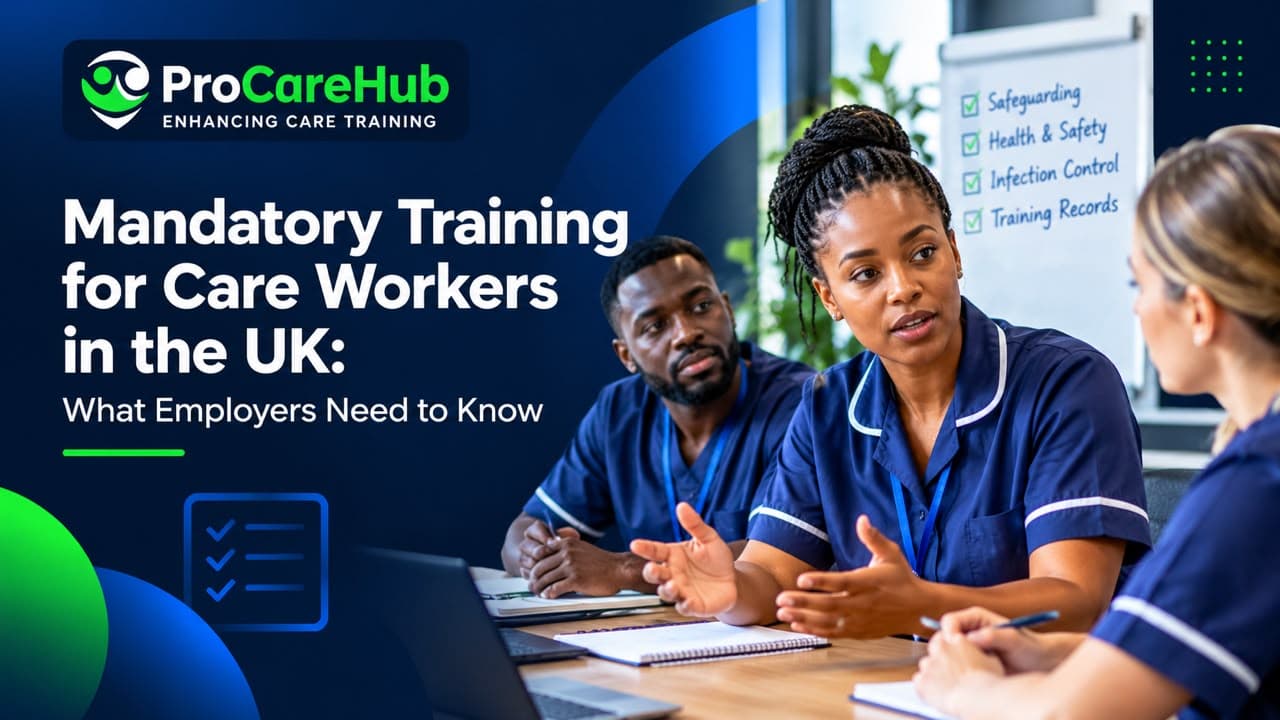
Mandatory Training for Care Workers in the UK: What Employers Need to Know
By ProCare Hub Team
Providing quality care starts with having a workforce that understands its responsibilities and has the skills to support people safely.
For care providers, ensuring staff receive appropriate training is essential. However, with different roles, workplace risks and training requirements to consider, keeping everyone up to date can be challenging.
So, what training might care workers need, and how can employers manage their team’s learning effectively?
What Is Mandatory Training for Care Workers?
Mandatory training is learning that employers require staff to complete to help them perform their roles safely and competently. Statutory training refers to training required by law.
In UK adult social care, training requirements depend on factors such as an employee’s responsibilities, the care setting, applicable legislation and regulatory expectations.
This means not every care worker will need exactly the same training. Employers should identify the requirements relevant to each role rather than relying on a standard checklist for every employee.
What Training May Care Workers Need?
Although requirements vary, several training areas are particularly relevant to care settings.
1. Safeguarding Adults
Care workers need to understand how to recognise potential abuse, neglect and exploitation. Safeguarding training helps staff identify concerns and follow the appropriate reporting procedures.
2. Health and Safety
Staff should understand workplace risks, safe working procedures and their responsibilities for protecting themselves and the people they support.
3. Infection Prevention and Control
Training can help care workers understand hand hygiene, appropriate use of personal protective equipment and procedures for reducing the spread of infection.
4. Moving and Handling
Where staff assist people with mobility or transfers, appropriate training helps them work safely and understand how to use relevant equipment. Practical instruction should be provided where the role requires it.
5. Medication-Related Training
Employees responsible for medication support or administration need training appropriate to their duties. Employers should ensure they can perform these tasks safely and competently.
6. Learning Disability and Autism Training
In England, relevant CQC-registered providers have statutory responsibilities concerning learning disability and autism training. Employers should ensure that the training provided is appropriate to staff roles and applicable requirements.
Care providers should also consider induction and the Care Certificate for workers entering adult social care, alongside any additional learning their roles require.
What Are Employers Responsible For?
Care employers must ensure their workforce has the skills, knowledge and experience needed to provide safe and effective care.
This involves more than booking courses. Employers should identify training needs, arrange appropriate learning, assess competence where necessary and maintain accurate training records.
For example, a staff member who begins supporting people with medication may need additional training before taking on those responsibilities.
Managers should also review training when workplace procedures change, new risks emerge or supervision identifies gaps in an employee’s knowledge.
How Can Care Providers Manage Staff Training Effectively?
Managing training becomes more complicated as teams grow. Without a clear process, it can be difficult to identify incomplete courses, upcoming refresher requirements or employees who need additional support.
Here are three practical steps care providers can take.
1. Keep training records organised.
Maintain records of completed courses, relevant assessments and refresher dates. This helps managers identify outstanding training and establish what action is needed.
2. Monitor training requirements regularly.
Review training records to identify gaps and upcoming deadlines. Remember that refresher requirements vary according to the subject, applicable guidance and workplace risks.
3. Check that staff can apply what they learn.
Completing a course does not automatically demonstrate practical competence. Supervision, workplace observation and competency assessments can help managers determine whether staff can apply their knowledge effectively.
Online training can also make learning more accessible, particularly for teams working different shifts or across multiple locations. However, practical instruction and assessment remain important where the role requires them.
How ProCareHub Can Help
Finding appropriate training is one challenge; organising it across a team is another.
ProCareHub provides online training for care professionals and organisations. Its platform helps learners access relevant courses, while organisation features support training allocation and progress monitoring.
For care providers managing multiple employees, these features can help bring training activities into a more organised process.
The right training will depend on your team’s responsibilities and the requirements of your service. Reviewing available courses against those needs is a useful starting point.
Explore the available training options at ProCareHub
Final Thoughts
Appropriate staff training helps care providers support safer working practices, develop staff competence and maintain a workforce prepared for its responsibilities.
The priority is not simply to ensure that courses are completed. It is to identify the right training for each role, keep records up to date and check that staff can apply what they have learned.
If you are reviewing your organisation’s training arrangements, start by identifying gaps and establishing a clear process for managing staff development.
Ready to take the next step? Visit ProCareHub to explore training options for care professionals and organisations.